
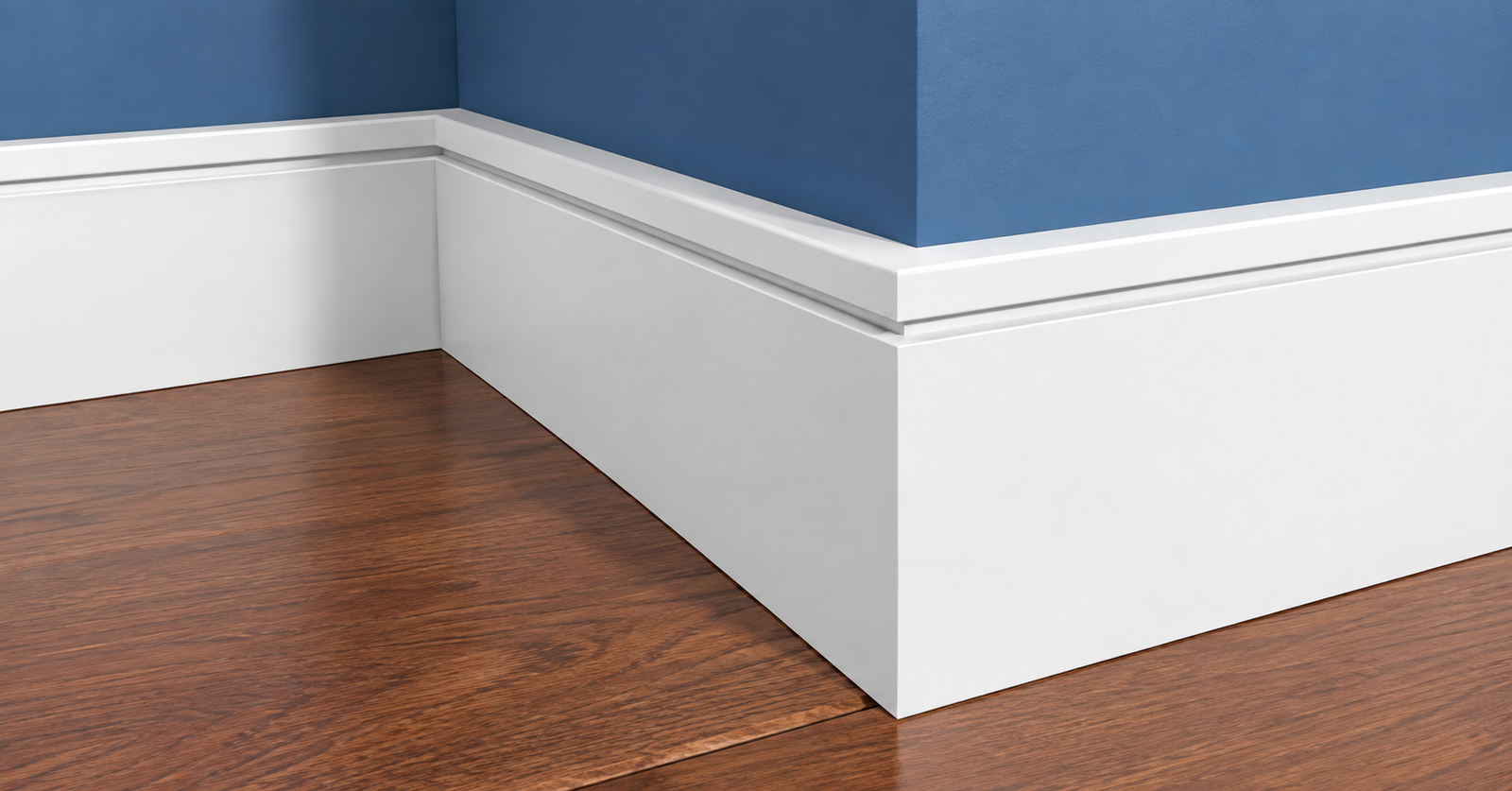

Finishing the transition between a floor and a baseboard may seem like a small part of an interior project, but the trim selected for this area can affect both appearance and functionality. Two of the most common options are shoe moulding and quarter round. Although these profiles are often confused with each other, they have different proportions, visual effects, and coverage capabilities.
Understanding the difference helps homeowners, contractors, designers, and property managers select the right trim for flooring installations, renovations, and room updates. The choice often depends on the size of the flooring gap, the baseboard profile, the room style, and how much trim projection is acceptable. Discount Moulding provides practical interior trim options for projects that require a clean, finished transition between flooring and baseboards.
Quick Answer:Shoe Moulding vs Quarter Round
The main difference between these two trim profiles is their shape. Shoe moulding is generally taller than it is wide. Its slimmer projection creates a subtle transition that blends closely with the baseboard. Quarter rounds are shaped like one-quarter of a circle, so its height and depth are usually equal. This gives it a fuller and more rounded appearance.
In a shoe molding vs quarter round comparison, shoe trim is often selected for a streamlined finish, while quarter round is commonly chosen when more coverage is needed over a flooring expansion gap.
Both products serve a similar purpose. They cover small spaces where the floor meets the baseboard, help conceal minor irregularities, and complete the perimeter of the room.
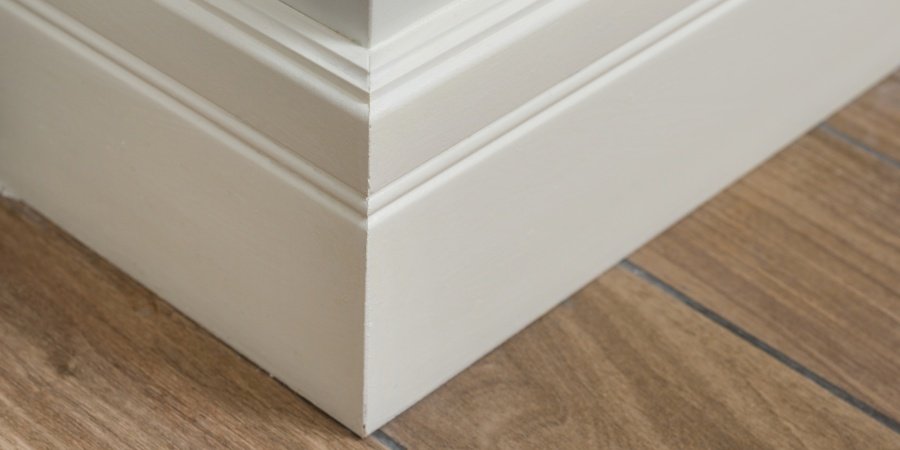
What Is Shoe Moulding?
Shoe moulding is a narrow finishing profile installed along the lower edge of a baseboard. It is designed to cover minor gaps between the flooring and the wall while creating a smooth visual transition. The profile is usually curved on the exposed side, but it is not symmetrical. It tends to have more vertical height than horizontal depth. This makes it less prominent on the floor than a traditional quarter-round profile.
The trim is especially useful in rooms where the floor is slightly uneven. Because the material is relatively narrow, installers can often follow minor variations in the floor more closely than they could with a rigid or oversized trim piece.
Common uses include:
- Hardwood flooring installations
- Laminate flooring projects
- Luxury vinyl plank installations
- Tile flooring transitions
- Remodeling projects where existing baseboards remain in place
- Rooms with small perimeter expansion gaps
It is available in materials such as MDF, primed finger-jointed pine, solid wood, PVC, and flexible synthetic products. The correct material depends on whether the trim will be painted or stained and whether the room is exposed to moisture.
What Is Quarter Round?
Quarter round is a curved trim profile shaped like one-quarter of a full circle. Its height and depth are usually the same, which creates a symmetrical appearance. For example, a quarter-round profile may measure 3/4 inches high and 3/4 inches deep. Because it projects farther across the floor than many shoe profiles, it can cover larger gaps between flooring and baseboards.
Quarter round is commonly used in traditional interiors, older homes, and rooms where flooring edges are not perfectly aligned with the wall. It is also useful when installers need additional coverage without replacing or repositioning the baseboards.
Typical materials include:
- Primed pine
- Oak and other hardwoods
- MDF
- PVC
- Flexible polymer trim
Quarter round can be painted to match the baseboard or stained to coordinate with hardwood flooring. The final finish depends on the desired visual effect and the material selected.
Key Differences Between the Two Profiles
Although both trim options are installed in the same general area, they are not identical.
Feature | Shoe Profile | Quarter Round |
Shape | Taller and narrower | Equal height and depth |
Appearance | Slim and understated | Full and rounded |
Floor projection | Usually smaller | Usually larger |
Gap coverage | Moderate | Greater |
Design style | Modern or transitional | Traditional or practical |
Visual impact | Blends with the baseboard | More noticeable |
Common use | Small expansion gaps | Wider perimeter gaps |
The most important differences are profile proportion, floor coverage, and visual weight. A slim profile may be more suitable in a room with contemporary baseboards and clean flooring lines. A larger quarter-round profile may be more practical when the flooring gap is too wide for a narrower trim piece.
How Shape and Dimensions Affect the Finished Look
Profile dimensions influence more than gap coverage. They also affect how much of the floor remains visible and how the trim relates to the baseboard. A narrow profile occupies less floor space. This can be helpful in small rooms, along narrow hallways, or in spaces where furniture must sit close to the wall. It also creates a lighter visual transition, particularly when the trim is painted in the same color as the baseboard.
Quarter round extends farther onto the floor. This stronger projection can be useful when the expansion gap varies in width or when the flooring does not meet the wall evenly. However, the trim may appear bulky if paired with a very thin or low baseboard.
Before selecting either option, measure:
- The widest visible flooring gap
- The height of the existing baseboard
- The depth of the baseboard profile
- The space available behind furniture
- The amount of trim projection acceptable for the room
These measurements help determine whether the trim will provide enough coverage without overwhelming the baseboard.
Which Option Looks Better?
The better-looking option depends on the architectural style of the room and the proportions of the existing trim.
- A narrow shoe profile typically works well in:
- Contemporary interiors
- Minimalist rooms
- Transitional homes
- Spaces with flat stock baseboards
- Rooms with modern flooring
- Areas where a subtle finish is preferred
Quarter round may be more appropriate in:
- Traditional interiors
- Historic homes
- Rooms with detailed baseboards
- Projects with wider flooring gaps
- Spaces where a fuller trim profile looks intentional
The trim should appear to be part of the baseboard system rather than an unrelated addition. A profile that is too large may draw unnecessary attention to the floor perimeter. A profile that is too small may fail to cover the gap.
Which Profile Covers Flooring Gaps Better?
Quarter round generally covers a wider flooring gap because it extends farther from the wall. Its symmetrical dimensions provide more horizontal depth than many shoe profiles.However, greater coverage is not always better. The selected trim should cover the required expansion space without extending unnecessarily across the finished floor.
A flooring gap should also be evaluated before it is concealed. Trim should not be used to hide major installation errors, damaged flooring edges, excessive movement, or moisture-related problems.Measure the widest point of the perimeter gap before purchasing material. The profile must cover that point while still allowing the floor to expand and contract according to the flooring manufacturer’s requirements.
Choosing Trim for Different Flooring Types
The flooring material can influence which profile and material are most suitable.
Hardwood Flooring
Hardwood naturally expands and contracts as indoor temperature and humidity change. A perimeter expansion space helps prevent boards from lifting or buckling.
Wood floor trim can be stained to coordinate with the flooring or painted to match the baseboard. Painted trim usually creates a more integrated wall treatment, while stained trim emphasizes the floor.
Laminate Flooring
Laminate is commonly installed as a floating floor. It requires an expansion space around the room perimeter.
The finishing profile should be attached to the wall or baseboard rather than nailed through the laminate. Fastening the trim to the floor may restrict natural movement and affect the installation.
Luxury Vinyl Plank
Luxury vinyl plank is frequently used in modern interiors, making a narrow trim profile a practical visual choice. Moisture-resistant materials may be beneficial in kitchens, laundry rooms, entryways, and other areas exposed to spills.
Tile Flooring
Tile edges may not meet the wall evenly, particularly in older rooms. A finishing profile can cover small variations and create a consistent perimeter line.In bathrooms and other damp environments, PVC or moisture-resistant materials may perform better than standard MDF.
Carpeted Rooms
Additional perimeter trim is not always necessary in carpeted rooms because the carpet often meets the baseboard directly. However, decorative trim may still be used when it supports the overall design or transitions into a hard-floor area.
Installation Differences and Best Practices
The installation process is similar for both profiles, but accurate measuring and fastening are essential.
Measure Each Wall Separately
Walls are not always perfectly square, so each section should be measured independently. Add a reasonable allowance for cutting errors, damaged sections, and waste.
Many installers purchase approximately 10 percent more material than the calculated linear footage.
Cut Corners Carefully
Outside corners are commonly joined with miter cuts. Inside corners may be mitered or coped. Coped joints can provide a tighter fit in rooms where walls are uneven or corners are not exactly 90 degrees.
Fasten the Trim Correctly
The trim should generally be fastened to the baseboard or wall. This is especially important with floating floors. Finish nails or brad nails are commonly used. Nails should be placed carefully to avoid splitting the trim or damaging the floor.
Prepare the Surface
Before installation:
- Remove dust and debris
- Check for loose baseboards
- Repair damaged wall areas
- Confirm the flooring gap
- Test the trim against uneven sections
Surface preparation reduces visible gaps and improves the final appearance.
Finish Nail Holes and Joints
After fastening, fill nail holes with an appropriate filler. Caulk small gaps where the upper edge meets a painted baseboard but avoid filling flooring expansion spaces. Sand repaired areas lightly before applying the final paint or stain touch-up.
Should Trim Match the Floor or the Baseboard?
In most painted interiors, the trim is finished to match the baseboard. This creates a unified appearance and makes the trim look like an extension of the wall moulding.
Matching the floor may be appropriate when:
- The trim is made from the same wood species
- The flooring has a stained finish
- The room uses traditional wood detailing
- The baseboard is also stained
- The design intentionally emphasizes the flooring
Matching the baseboard may be better when:
- The room has painted trim
- The flooring includes varied tones
- A clean and continuous wall line is preferred
- The room has modern or transitional styling
- The trim should remain visually subtle
Consistency matters more than following one universal rule. The finish should support the room’s overall material palette.
What Is Baseboard Shoe Moulding?
Baseboard shoe moulding refers to the small trim installed directly against the lower section of the baseboard. Its purpose is to conceal minor flooring gaps and create a finished edge. It is not intended to replace the baseboard itself. The baseboard covers the lower portion of the wall, while the shoe profile finishes at the point where the baseboard and floor meet.
Baseboard shoe moulding is commonly selected for both new construction and renovation projects because it creates a clean transition between the flooring and the baseboard while hiding minor imperfections. It also helps achieve a more polished appearance without requiring extensive modifications to existing trims.
This type of trim is particularly useful during flooring replacement projects. If the existing baseboards remain installed, a small finishing piece can cover the new perimeter gap without requiring the entire baseboard system to be removed and reinstalled.
Can the Two Profiles Be Used Interchangeably?
They can sometimes be used for the same functional purpose, but they should not be treated as identical products.
Either profile may work when:
- The flooring gap is relatively small
- The existing baseboard is large enough to support either shape
- The material is suitable for the room
- The selected finish coordinates with the interior
They are less interchangeable when the project requires a specific amount of coverage or a particular architectural appearance. A narrow profile may not cover a wide gap. A large quarter round may look disproportionate against a low or thin baseboard.
Common Selection and Installation Mistakes
Avoiding a few common mistakes can improve both appearance and performance.
Choosing Trim Before Measuring the Gap
Profile selection should begin with accurate measurements. A visually appealing trim is not useful if it does not cover the widest perimeter of space.
Selecting an Oversized Profile
Larger trims may provide more coverage, but it can appear heavy and reduce visible floor space.
Nailing Into Floating Flooring
Fastening through laminate or vinyl flooring can restrict movement. Attach the trim to the wall or baseboard instead.
Ignoring Moisture Conditions
Standard MDF may not be the best choice for wet or humid areas. Review the room conditions before selecting a material.
Leaving Exposed Ends
Trim that ends at a doorway, cabinet, or transition should have a finished return or carefully cut termination.
Mixing Inconsistent Finishes
Combining painted baseboards, stained quarter round, and unrelated flooring tones can make the perimeter look disconnected. Choose the finish as part of the complete room design.
How to Choose the Right Option
Use the following factors to make the final decision.
Measure the Required Coverage
Select a profile that covers the widest flooring gap while maintaining the required expansion space.
Review the Baseboard Proportions
A low baseboard usually looks better with a slim profile. A taller or more decorative baseboard can support a larger trim shape.
Consider the Interior Style
Use a narrow profile for an understated appearance. Choose quarter round when a fuller, traditional look fits the room.
Select the Appropriate Material
MDF works well for many painted interior applications. Solid wood is suitable for stained finishes. PVC and moisture-resistant materials may be better for bathrooms, laundry rooms, and other damp spaces.
Confirm Product Quantities
Calculate the room perimeter, subtract door openings where appropriate, and add extra material for cuts and waste. Discount Moulding helps homeowners, builders, and renovation professionals find practical interior trim for flooring and baseboard applications.
Conclusion
The difference between shoe moulding and quarter round comes primarily to shape, projection, and coverage. A shoe profile is generally taller and narrower, giving it a subtle appearance that works well in modern and transitional interiors. Quarter round has equal height and depth, creating a fuller profile that can cover wider flooring gaps.
The right choice depends on the flooring gap, baseboard size, room style, material requirements, and desired finish. Accurate measurements should guide the selection before appearance is considered. Contact Discount Moulding for stocked trim options that support flooring installations and interior finishing projects.
FAQs
Is shoe moulding the same as quarter round?
No. The two profiles perform similar functions, but their shapes differ. Shoe trims are usually taller and narrower, while quarter rounds have equal height and depth. This difference affects how far the trim extends onto the floor and how noticeable it appears against the baseboard.
Which is better, shoe moulding or quarter round?
Neither option is universally better. A narrow profile is often preferred for a cleaner, more understated appearance. Quarter rounds are useful when a wider flooring gap requires more coverage. The best choice depends on measurements, baseboard proportions, and room style.
Can trim cover a flooring expansion gap?
Yes. A correctly sized trim profile can cover the expansion gap left around hardwood, laminate, or vinyl flooring. The trim should conceal the gap without restricting the flooring’s natural movement.
Should the trim match the floor or baseboard?
Painted trim typically matches the baseboard to create a consistent wall finish. Stained wood trim may match the flooring when the room includes natural wood finishes. The choice should coordinate with the complete interior design.
Is the quarter round required when installing new flooring?
Not always. If the baseboards are removed and reinstalled after the flooring is completed, additional trims may not be necessary. It is commonly added when existing baseboards remain in place, and a visible perimeter gap needs to be covered.
Can quarter round be installed without a baseboard?
It can be installed against another suitable vertical surface, but it is generally not used as a complete substitute for a baseboard. Baseboards protect the lower wall and provide a more substantial, finished edge.
Should floor trim be nailed to the flooring?
No. It should normally be fastened to the baseboard or wall. This allows floating flooring systems to expand and contract without being restricted by nails.
What material is best for painted trim?
Primed MDF and finger-jointed pine are common choices for painted interiors. Pine may provide greater resistance to minor moisture and impact, while MDF offers a smooth and consistent painted surface.
Which profile works best in a modern room?
A slim profile often works better in modern spaces because it projects less onto the floor and blends closely with flat or streamlined baseboards.