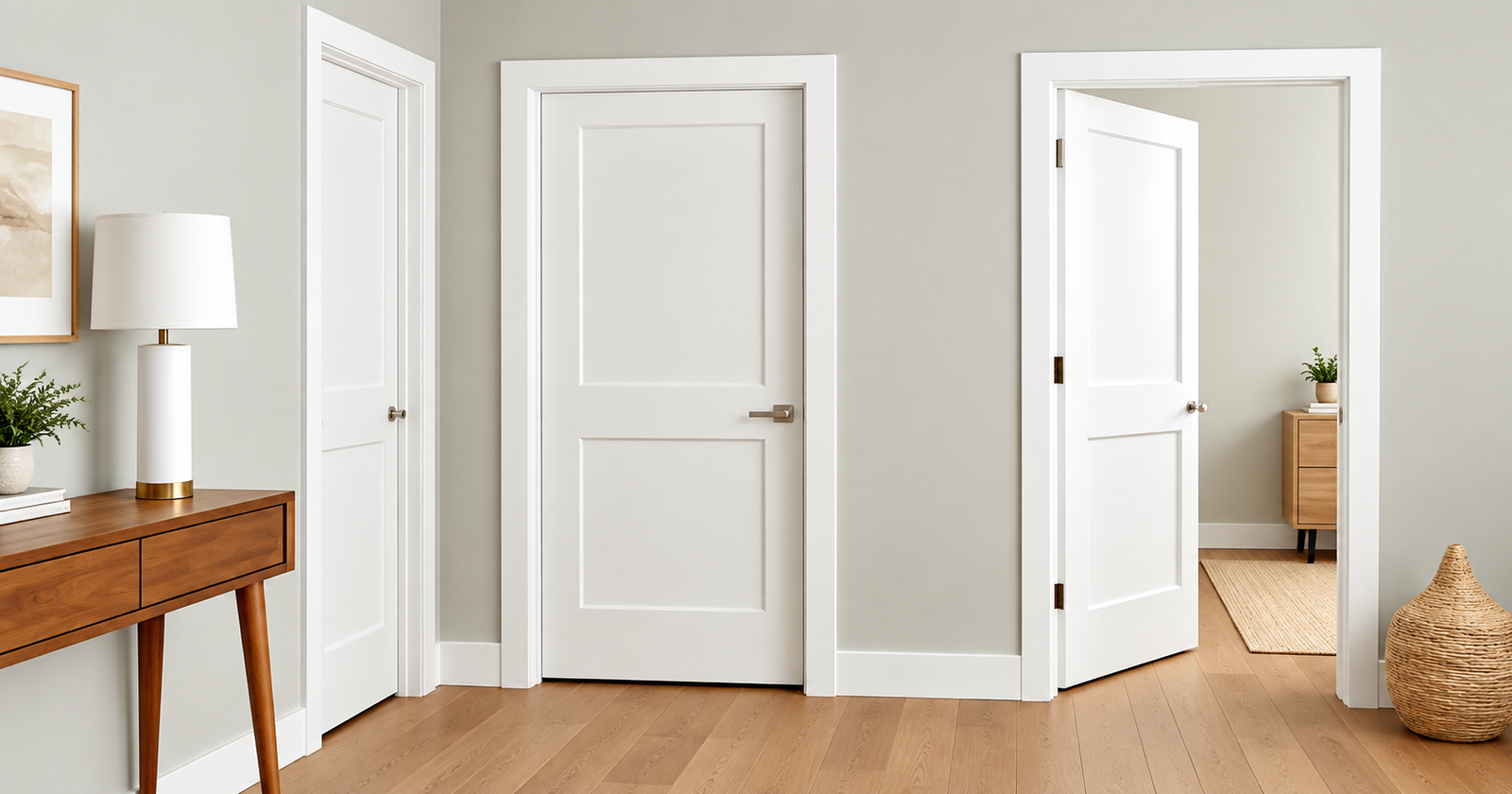
Choosing the right interior doors can improve how a home looks, feels, and functions every day. A door affects privacy, sound control, light flow, room access, and the finished look of the space around it. The best choice is not only about design. It also depends on room purpose, construction type, size, swing direction, trim style, and installation needs.
For homeowners, builders, landlords, flippers, and contractors, interior doors should be selected early in the project. Waiting until the final stage can lead to sizing issues, mismatched trim, delayed installation, or a style that does not fit the rest of the home. Discount Moulding helps buyers compare door styles, moulding options, and project details before requesting a quote.
Why Interior Doors Matter in Home Design
Interior doors are easy to overlook, but they shape the way each room is experienced. They create separation between private and shared spaces, help control noise, and support the design style of bedrooms, bathrooms, closets, offices, hallways, and utility rooms.
When interior doors match the casing, baseboards, hardware, and wall color, the home feels more complete. When they are damaged, dated, or inconsistent, even a freshly painted room can feel unfinished. Replacing interior doors is often a practical upgrade for remodels, rental refreshes, resale preparation, and full home renovations because it improves both appearance and daily function.
Start With the Room and Its Purpose
Before choosing a style, think about what the room needs from the door. A bedroom needs privacy. A bathroom needs a dependable fit and a paintable surface. A closet may need simple access. A laundry room may need airflow. A home office may need better sound control.
Bedrooms usually benefit from solid core options because they feel heavier and reduce sound better than lightweight doors. Bathrooms need a door that closes cleanly and works with the surrounding trim. Closets can use swing, sliding, or bi fold styles depending on available clearance. Laundry rooms may benefit from louver styles that allow ventilation. Home offices often need interior doors that help separate work calls from household noise.
Choose the Right Interior Door Style
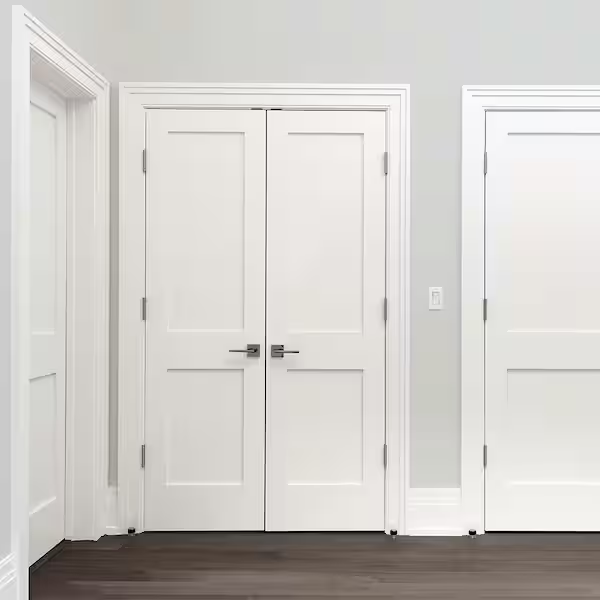
The door style should match the home’s architecture and the design direction of the room. A clean modern home may need simple profiles. A traditional home may look better with raised panels. A transitional home can often use a balanced design that is not too plain or too decorative. Shaker doors are one of the most flexible options. Their clean lines work well in modern, farmhouse, transitional, and updated traditional homes. One panel, two panel, and three panel Shaker designs can make interior doors feel upgraded without making the space look busy.
Flush doors have a smooth, flat surface. They are a strong choice for contemporary interiors, apartments, and rooms with minimal details. They pair well with simple casing, flat stock, and streamlined hardware.Six panel doors are a familiar option for traditional homes, rentals, flips, and budget conscious renovations. They are widely recognized and can bring consistency to several rooms at once.
Glass doors are useful when a room needs light. Offices, pantries, dining rooms, and flex spaces can benefit from clear, frosted, or textured glass. Privacy should be considered before choosing glass. Louver doors are best for areas that need airflow, such as laundry rooms, mechanical closets, and utility areas. They provide coverage while allowing ventilation.
Understand Door Construction
Construction affects weight, sound control, durability, and price. Two interior doors can look similar but perform very differently after installation. Hollow core doors are lightweight and affordable. They are often used for closets, rentals, and lower traffic spaces where sound control is not the main concern. They are easy to handle, but they do not provide the same privacy as heavier doors.
Solid core doors are filled with a denser material. They feel more substantial, reduce noise better, and hold up well in rooms used every day. They are a practical choice for bedrooms, bathrooms, offices, and shared living spaces. Solid wood core doors offer a more premium feel and stronger construction. They may be selected for higher value renovations or spaces where a heavier feel and long term performance matter. Buyers should also consider paint, humidity, and maintenance before choosing this option.
Prehung Doors vs. Slab Doors
One key buying decision is whether to choose a prehung door or a slab. A slab is only the door panel. It does not include the frame, jamb, or hinges. A slab can work when the existing frame is square, secure, and in good condition.
Prehung interior doors come already mounted in a frame with hinges attached. They are often better for new construction, full replacements, and remodels where the frame is also being updated. Prehung interior doors can reduce guesswork because the door and frame are supplied together.
For buyers managing several openings, Discount Moulding can help make the selection process more organized by allowing them to compare style, size, construction, trim needs, and quote details in one place.
Confirm Size, Jamb, and Swing Direction
A door must fit properly before style matters. Measure the width, height, jamb size, rough opening, and finished opening. Also confirm whether the project needs a new frame or only a replacement slab.
Interior doors come in different widths and heights, and not every room uses the same size. Bedrooms, bathrooms, closets, and utility rooms may each require different measurements. Taller doors can create a more custom look, but they need to fit the ceiling height, opening, and trim layout.
Swing direction is also important. A right hand or left hand swing affects hinge placement, handle location, furniture clearance, hallway movement, and light switch access. The right swing should allow the door to open without blocking daily movement or nearby doors.
Match Interior Doors With Moulding and Trim
Interior doors should be planned with casing, baseboards, shoe moulding, crown moulding, and flat stock. Interior doors that do not match the surrounding trim can make a finished room feel disconnected. Simple modern interior doors often pair well with flat casing and clean baseboards. Traditional panel interior doors may work better with more detailed casing and classic baseboards.
Shaker doors are flexible because they can connect modern and traditional details. The goal is to make the full room feel intentional. Paint and hardware also affect the final result. A primed door can be painted to blend with the walls or contrast with the trim. Matte black hardware adds contrast. Brushed nickel gives a neutral look. Brass adds warmth. Hinges, handles, lighting, cabinet pulls, and nearby fixtures should work together.
Buying Interior Doors for Different Projects
Different buyers have different priorities. A homeowner may care most about style, paint color, privacy, and matching existing trim. A contractor may need consistent sizes, repeatable styles, and dependable availability. A landlord or flipper may need a clean look, fair pricing, and durable products that can refresh multiple rooms.
For full home renovations, choose one main style for most rooms. Use special styles only where the room function requires it, such as glass for an office or louver panels for a laundry room. This keeps interior doors consistent while still allowing the home to function properly.
Local buyers may also want to visit an interior door showroom before ordering. Seeing the profile, finish, construction, and trim pairing in person can make the decision easier. For shoppers comparing interior doors Tysons Corner options, an interior door showroom can also help confirm product availability, pickup details, local delivery, and quote requirements before the project begins.
Common Mistakes to Avoid
Many buying mistakes happen because details are skipped. Do not choose interior doors based only on appearance. Confirm measurements, swing direction, jamb size, trim style, and construction type before requesting a quote.
Avoid mixing too many unrelated styles in one hallway. Avoid using hollow core doors where privacy and sound control matter. Avoid choosing hardware without checking nearby finishes. Avoid waiting until the end of a remodel to order doors. Early planning helps reduce delays, improve fit, and create a more consistent finished result.
Checklist Before You Request a Quote
Before requesting pricing, prepare the key details. List how many interior doors you need, where each door will be used, and the preferred style. Note the width, height, jamb size, swing direction, construction preference, and hardware finish.
Add whether you need matching casing, baseboards, shoe moulding, crown moulding, or flat stock. Also decide whether pickup or local delivery is needed. Clear information helps the quote process move faster and reduces the risk of ordering the wrong product.
Conclusion
The right door should fit the opening, match the design of the home, support the room’s purpose, and coordinate with the surrounding trim. Interior doors influence privacy, sound, airflow, movement, and the finished appearance of every room.
Whether you are replacing one door, updating a rental, preparing a home for resale, or managing a larger construction project, start with function, then compare style, size, construction, swing direction, and trim needs. To compare available products for your next project, View door options with Discount Moulding.
FAQs
What are the best interior doors for bedrooms?
Solid core or solid wood core options are often best for bedrooms because they feel heavier and provide better privacy than hollow core doors. They also help reduce sound between rooms.
Are prehung doors better than slab doors?
Prehung doors are usually better for new construction, full replacements, and remodels where the existing frame is damaged or being removed. Slab doors can work when the current frame is straight, secure, and properly sized.
What is the most popular interior door style?
Shaker doors are popular because they work with modern, farmhouse, transitional, and updated traditional homes. Six panel doors are also common for classic and budget focused projects.
Should I choose hollow core or solid core doors?
Choose hollow core doors for lower cost areas such as closets or rooms where sound control is less important. Choose solid core doors for bedrooms, bathrooms, offices, and spaces where privacy and durability matter.
What should I measure before buying interior doors?
Measure the door width, height, jamb size, rough opening, and finished opening. You should also confirm swing direction and whether the project needs a prehung unit or a slab.
Can interior doors be matched with baseboards and casing?
Yes. Matching doors with casing, baseboards, and other moulding creates a cleaner and more consistent look. It also helps avoid mismatched profiles during installation.
When should I visit a showroom before buying doors?
Visit a showroom when you want to compare styles, construction, profiles, trim pairings, and availability before ordering. This is useful for multi room renovations, contractor projects, and full home updates.